

The way enterprises are thinking about their infrastructure has changed. Digital sovereignty of all kinds – data sovereignty, operational sovereignty, and software sovereignty – have begun to dominate the infrastructure discussion. Today, these abstract terms have become practical concerns for platform teams. Changing regulations, geopol
30 years after its introduction, Secure Shell (SSH) remains the ubiquitous gateway for administration, making it a primary target for brute force attacks and lateral movement within enterprise environments. For system administrators and security architects operating under the weight of regulatory frameworks like SOC2, HIPAA, and PCI-DSS,
Stability, backports, and hidden risks of the bleeding edge In the modern DevSecOps world, CISOs are constantly looking for signals in the noise, and the outputs of security scanners often carry a lot of weight. A security scan that returns a “zero CVE” report often unlocks promotion to production; a single red flag can block
The modern enterprise operates in a hybrid world where on-premises infrastructure coexists with cloud services, and security threats evolve daily. IT administrators are tasked with a difficult balancing act: maintaining traditional local workflows while managing the inevitable shift toward cloud-native architectures. Identity has emerged

At KubeCon Europe in Amsterdam, NVIDIA announced that it will donate the GPU Dynamic Resource Allocation (DRA) Driver to the Cloud Native Computing Foundation (CNCF). This marks an important milestone for the Kubernetes ecosystem and for the future of AI infrastructure. For years, GPUs have been central to modern machine learning and high

Zero CVEs doesn’t mean secure. It means unexamined. New code has zero CVEs because no one has studied it yet, and if you’re rebuilding nightly from upstream, you’re signing first and asking questions later. In software supply chain security, the freshest code isn’t always the safest. Sometimes the most secure component in your pipeline is
Canonical’s Gold-level investment in the Rust Foundation supports the long-term health of the Rust programming language and highlights its growing role in building resilient systems on Ubuntu and beyond. AMSTERDAM, THE NETHERLANDS — March 23, 2026 (Open Source SecurityCon, KubeCon Europe 2026) — Today Canonical announced that it has joine
Canonical, the publisher of Ubuntu, is pleased to announce a new partnership with developer-focused cybersecurity company Snyk. Snyk Container, Snyk’s container security solution, now offers native support for scanning chiseled Ubuntu containers. This partnership will create a path to a more secure container ecosystem, where developers wi

Newsletter signup

Canonical introduces the beta release of MicroCloud Cluster Manager, a new way to discover, organize, and operate your MicroCloud environments from a single, unified interface.

Canonical announces that it has certified Advantech’s latest modular fanless edge IPC system, MIC-770 V3W, on Ubuntu 24.04LTS. With official Ubuntu certification, the MIC-770 V3W provides a securely-designed, stable platform with long-term compatibility ideal for AIoT and edge computing applications. An industrial-grade, high performance
Canonical is working with Microsoft Defender to improve the security of organizations’ mission-critical Linux workloads (March 18, 2026) Today Canonical, the publishers of Ubuntu, announce a new security initiative with Microsoft Defender, aimed at deeply reinforcing the security offered along with Canonical’s security maintenance servic

After over a decade of running a homelab, I have learned a few difficult lessons. Although it begins as a “lab,” you inevitably end up with something you want to keep. If a service goes down for an extended period of time or you lose data, it can feel catastrophic. The anxiety of missed emails
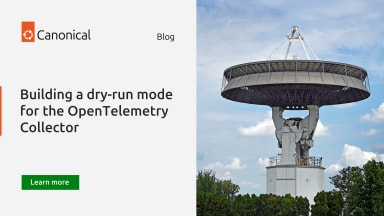
Teams continuously deploy programmable telemetry pipelines to production, without having access to a dry-run mode. At the same time, most organizations lack staging environments that resemble production – especially with regards to observability and other platform-level services. Despite knowing the potential risks involved due to the lac
Today Canonical, the publishers of Ubuntu, announced that it will integrate and distribute the NVIDIA DOCA-OFED networking driver with Ubuntu.
Previewing at the event: NVIDIA CUDA support in Ubuntu 26.04 LTS, NVIDIA Vera Rubin NVL72 architecture support in Ubuntu 26.04 LTS, Canonical’s official Ubuntu image for NVIDIA Jetson Thor, upcoming support for NVIDIA DGX Station and NVIDIA DOCA-OFED, and NVIDIA RTX PRO 4500 support. NVIDIA GTC 2026 is here, bringing together the technolo

Qualys discovered several vulnerabilities in the AppArmor code of the Linux kernel. These are being referred to as CrackArmor, while CVE IDs are in the process of being assigned by the Linux Kernel CVE Numbering Authority. There are eleven patches for the nine vulnerabilities and each patch is assigned a CVE IDs: CVE-2026-23268, CVE-2026-
Ubuntu tech blog
Deep dives for developers
Visit the Ubuntu Tech Blog for deep dives into product features, step-by-step tutorials, and the latest updates from Canonical's engineering teams.