
Official Ubuntu support for the NVIDIA Rubin platform, including the NVIDIA Vera Rubin NVL72 rack-scale systems, announced at CES 2026 CES 2026, Las Vegas. – Canonical, the publisher of Ubuntu, is pleased to announce official support for the NVIDIA Rubin platform and the latest distributions of the new NVIDIA Nemotron 3 open models. As A

This year, the Canonical team will be at Booth #10562 in the North Hall, we will be demonstrating how Ubuntu Core, Ubuntu Pro for Devices, and our partner ecosystem help you accelerate development, ensure reliability, and simplify the lifecycle of your connected fleets.
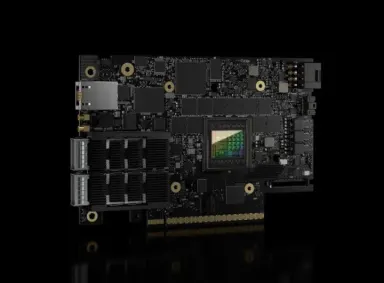
The recent release of MAAS 3.7 introduces a significant new capability: the ability to provision NVIDIA BlueField Data Processing Units (DPUs) directly through their Baseboard Management Controller (BMC),

Recently, the team at MinIO moved the open source project into maintenance mode and will no longer accept any changes. That means that no new features or enhancements will be added to MinIO, and existing issues — according to the update — will not be actively considered. Whilst MinIO brought a solid developer-friendly approach to
FOSDEM is one of the biggest and most exciting open source events of the year, held at the Solbosch campus of the Université Libre de Bruxelles (Brussels), Belgium. Thousands of open source contributors and enthusiasts attend, often with several folks from Canonical among them. The next one is coming quickly, with FOSDEM 2026 being held
Canonical has now extended its ESM (Expanded Security Maintenance) for ROS coverage to ROS Noetic content-sharing snaps. With ESM for ROS now available in both deb and snap formats, Ubuntu continues to be the trusted foundation for secure, long-term robotics innovation.
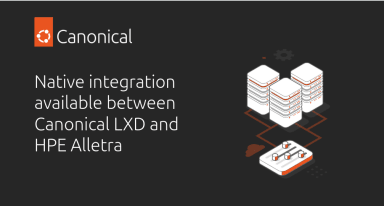
Native integration available between Canonical LXD and HPE Alletra MP B10000. The integration combines efficient open source virtualization with high performance, enterprise-grade storage

Fulfilling your Microsoft Azure Consumption Commitment (MACC) requires efficient planning. Discover how allocating your MACC to Ubuntu Pro allows you to meet consumption goals while securing your open source supply chain and automating compliance.

Newsletter signup

Setting up a local Deep Learning environment can be a headache. Between managing CUDA drivers, resolving Python library conflicts, and ensuring you have enough GPU power, you often spend more time configuring than coding. Google Cloud and Canonical work together to solve this with Deep Learning VM Images, which use Ubuntu Accelerator Opti
Telecommunications networks are undergoing a cloud-native revolution. 5G promises ultra-fast connectivity and real-time services, but achieving those benefits requires an infrastructure that is agile, low-latency, and highly reliable. Kubernetes has emerged as a cornerstone for telecom operators to meet 5G demands. In 2025, Canonical Kube

At Canonical, time is fixed. Ubuntu releases never slip because we run on a strict rhythm: six-month cycles, two-week pulses, and in-person sprints. Every change is deliberate, ensuring stability without losing agility. This discipline is what enables us to provide 15 years of Long-Term Support. Reliability is built into everything we do.
Canonical is pleased to announce an expanded collaboration with AMD to package and maintain AMD ROCm™ software directly in Ubuntu. AMD ROCm is an open software ecosystem to enable hardware-accelerated AI/ML and HPC workloads on AMD Instinct™ and AMD Radeon™ GPUs, simplifying the deployment of AI infrastructure with long term support from

5G continues to transform the telecommunications landscape, enabling massive device density, edge computing, and new enterprise use cases. However, operators still face significant cost pressures: from accelerating RAN modernization and 5G SA rollouts to energy demands and the shift to cloud-native network functions (CNFs). As telcos rede

This year, we’re excited to show a demo that combines the strengths of both Anbox Cloud and Rightware’s Kanzi, the industry-leading software for creating rich, visually stunning infotainment interfaces.
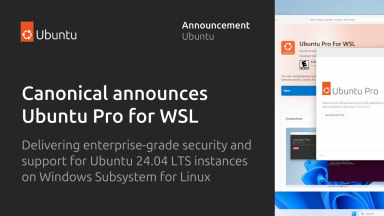
Ubuntu Pro for WSL provides turnkey security maintenance and enterprise support for Ubuntu 24.04 LTS WSL instances in Windows. The subscription will also enable comprehensive management for system administrators. Today, Canonical announced the general availability of Ubuntu Pro for WSL which can be installed from the Microsoft Store. Sou
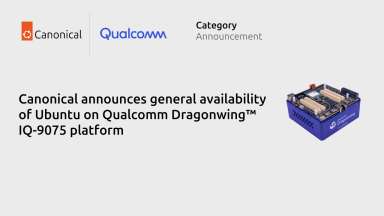
December 1, 2025 – Canonical, the publisher of Ubuntu, today announced the availability of certified images for the Qualcomm Dragonwing™ IQ-9075 platform. This high-performance industrial platform is now fully supported with optimized images for Ubuntu 24.04 LTS. The certified images are available for both Ubuntu Server and Desktop, equip
Ubuntu tech blog
Deep dives for developers
Visit the Ubuntu Tech Blog for deep dives into product features, step-by-step tutorials, and the latest updates from Canonical's engineering teams.